Another interview with game developers, this time featuring Weird Beluga and their new title Duskfade. How many programmers worked on the game? Can you go too far when balancing difficulty? What was the Polish contribution to the project and why are we talking about „Finding Dory”? Let’s find out!
I’ve really gotten into interviews with game developers lately. They offer a chance to get interesting details about a game and its creation, but also simply to meet passionate enthusiasts dedicated to our hobby. Thanks to JF Games, I managed to arrange an interview with Weird Beluga, the creators of the recently released Duskfade. The game is infected with the magic of the PlayStation 2 era, something I absolutely love. So, I invite you to check out the chat below, as well as the video review, in case you aren’t familiar with this title yet.
repip: Hi there! I’ve just finished playing Duskfade, and the atmosphere of the world you created has really stayed with me. But before we dive into that, could you briefly introduce our readers to your studio’s work and what projects are in your portfolio? I’m also curious — how many people are in the core team?
Weird Beluga: The studio’s first game was Clid the Snail, a top-down shooter about a snail with a shotgun (quite a change!). After a short break, two of the original founders started developing a prototype for a platformer that would eventually become the Duskfade we know today.
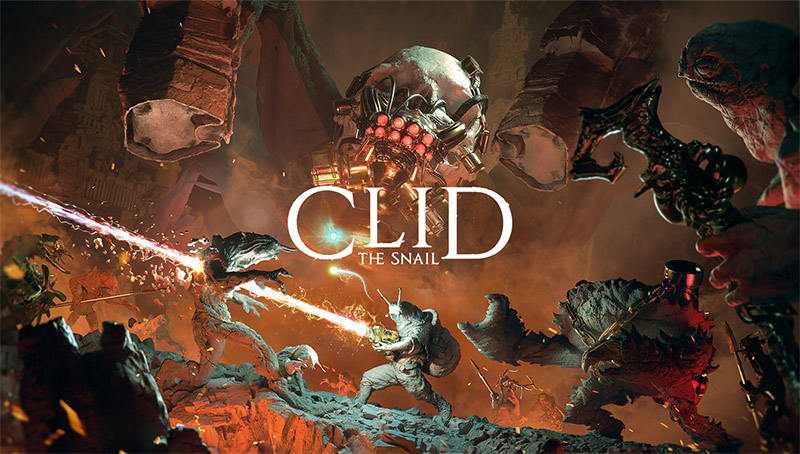
The studio’s first game was the top-down shooter Clid the Snail, although only two members of that team remain
Right now, the studio is made up of 14 people, with most of the team working on the art side. And as a fun fact, we’ll admit that we only have one programmer — one of the two people who originally started working on the prototype.
repip: This might be an wierd question for an interview like this, but I’m intrigued why you chose an animal like the beluga whale for your studio’s name?
Weird Beluga: It’s a funny story. While we were making Clid the Snail back in our university days, our teammate Tomi had a plush toy of the beluga whale from Finding Dory that made really funny noises when you squeezed it. Sometimes we even used it to decide who won duels when playing the board game Bang!
Eventually, we grew pretty fond of the beluga, and it ended up becoming both the name and the logo of the studio.
repip: Duskfade can be considered an artistic vision in many aspects. I really like the landscapes you consistently showcase in every world. Was it your intention to always place a perfectly positioned object/place for the journey in the background—one that sets the tone and color for everything around it? I really appreciated this stylistic choice; it wouldn’t have been nearly as effective without such beautiful landscapes brought to life by that magnificent lighting!
Weird Beluga: We’re aware that the game’s art is one of our strongest points, so we really wanted to make it stand out, and that’s all thanks to our incredible artists.
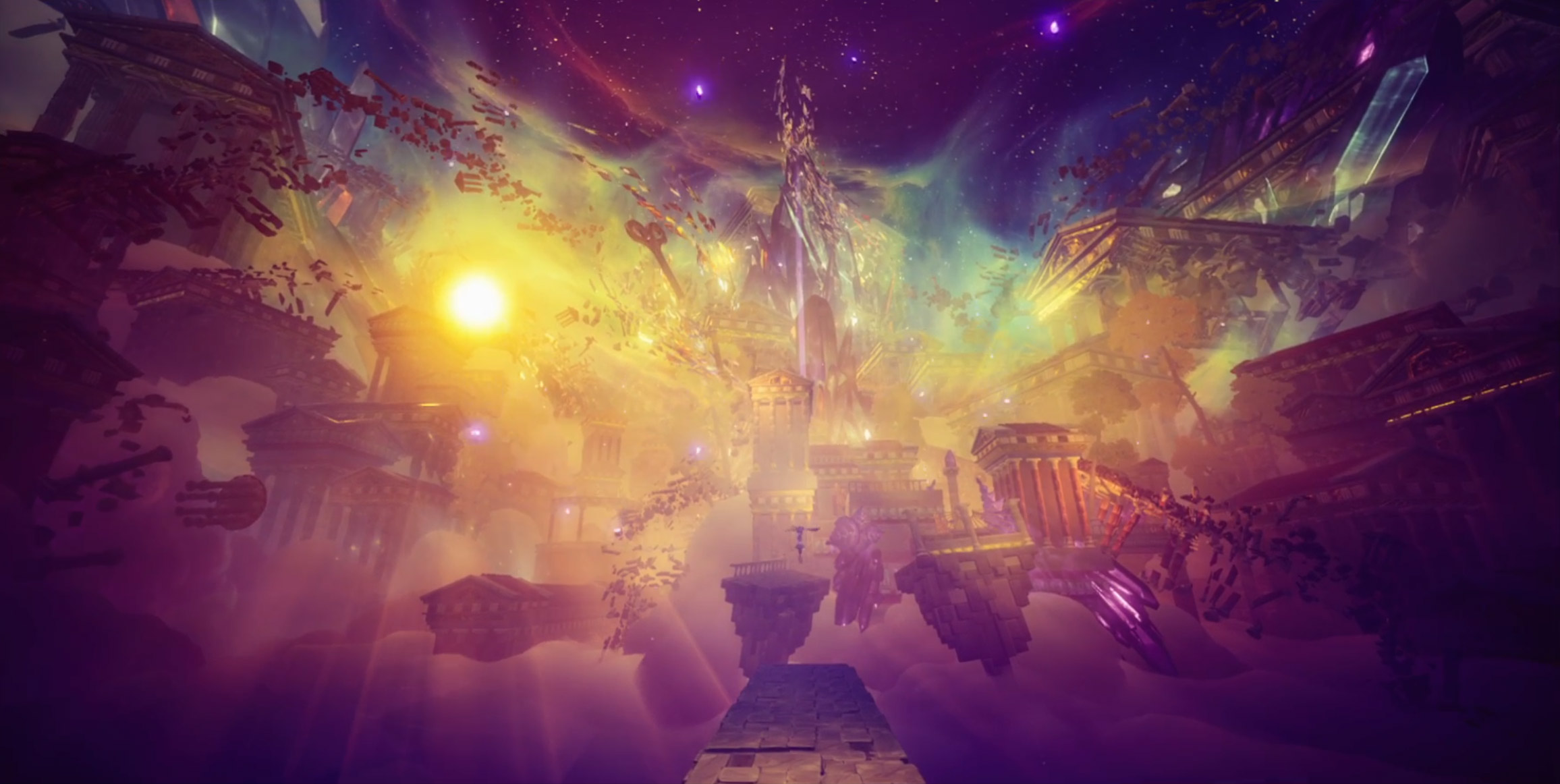
You can really tell that the studio’s core consists of artists
Having a clearly distinguishable landmark visible in the distance is always important, both for level design and for the artistic side of things. It gives players a reference point for where they’re heading and helps them understand how they’re progressing along their journey. As you mentioned, it also works really well for establishing the atmosphere and giving the whole level a sense of cohesion.
repip: I played on Clockmaker, the difficulty level you recommended, and one thing made me curious: what did the balancing process look like during development? What factors led you to settle on that specific setup as the optimal one? Did you have external playtests, or did you rely on internal testing? Did you test the bosses in only, or did you also consider the platforming sections—which might have been too hard or too easy? I ask because the game introduces quite a few mechanics over time and the bosses offer a fair challenge. I’m interested in the process of bringing together and balancing all those elements.
Weird Beluga: First, we defined what we wanted the “normal” difficulty to be, with this being the recommended way to play and the one closest to our intended experience. Once we had that as a reference point, we built the other difficulty settings around it.
Balancing this was one of the most difficult parts of the later stages of development. Fortunately, we had a lot of external playtesting which, together with the demo, gave us a huge amount of useful information about the state of the combat and its difficulty. Of course, we thoroughly tested every part of the game ourselves, but there comes a point where your own perception of the experience becomes distorted after spending so many hours playing and testing it, to the point where we were no longer reliable test subjects.
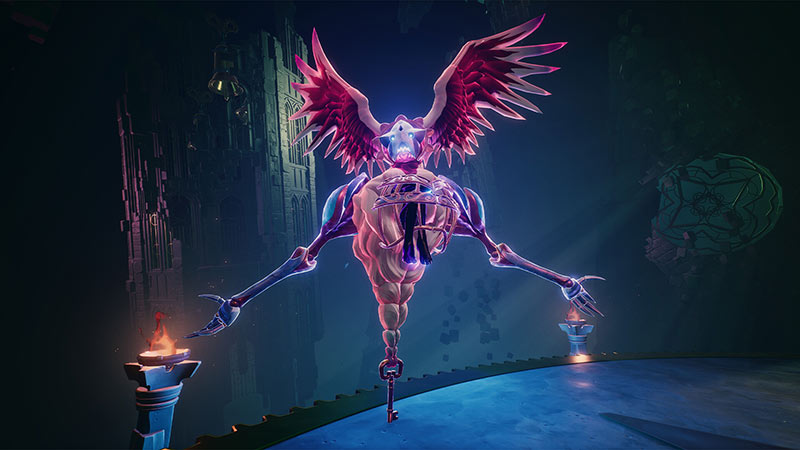
Solitude required adjustments during the game’s development because… it was so difficult that no one at the studio could beat it!
Our biggest focus when balancing the game and defining the different difficulty settings was the bosses. Regular encounters were more straightforward, but with the bigger fights, even small changes could result in very different experiences. For example, at one point the Solitude miniboss was so difficult that nobody in the studio could beat it, while the second boss of that same level was easier.
So, to sum it all up: test, test, and test again until you find the sweet spot.
repip: Duskfade features mechanics typical of Metroidvanias—where, upon first entering an area, you can’t fully explore it, you see potential for interaction but lack the necessary skill or gadget. That raises a question about your level design process: did you plan from the start to include rooms meant for later discovery—implementing the design as a cohesive whole— or did you add branches for these late-game secrets to levels that were already complete? What led to the decision, for instance, to introduce the sundial (I love it!) in the second half of the game rather than earlier?
Weird Beluga: Everything was planned earlier. From the very beginning, before we even started working on each area, we had a rough visual map showing where the secret areas would be in each level and which abilities would be required to reach their rewards.
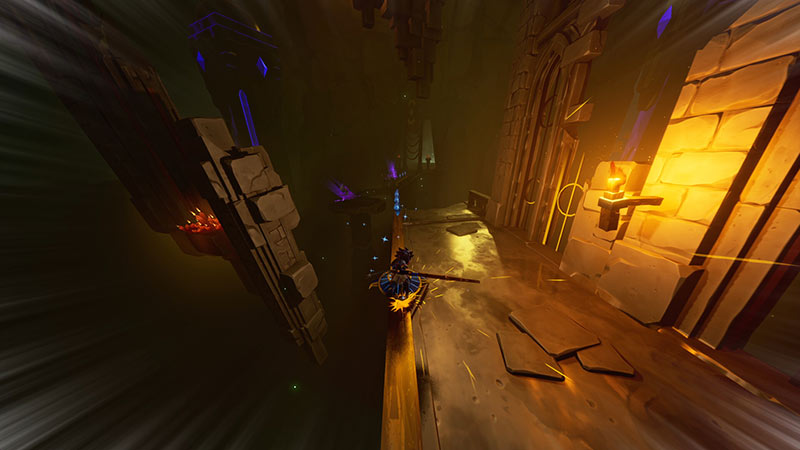
the sundial board runs are my favorite. As it turns out, they remain important even after finishing the game
The sundial grinding mechanic was also something we always knew we wanted in the game. Not only does it add more variety later in the story, but it also gives you a different and faster way to traverse previous levels when you return to explore them.
repip: I saw on your Instagram that Kingdom Hearts was an inspiration for you, but so was Disney’s Treasure Planet—I love that movie (the PS2 game wasn’t bad either), though I get the feeling it flew completely under the radar and is a bit of a hidden gem. Speaking of which, was there any other hidden gem from the sixth console generation that inspired you? It took me years to finally play titles like Kya: Dark Lineage or Brave: The Search for Spirit Dancer; that generation had so many interesting games in that style that it’s impossible to keep track of them all! That’s why I’m curious to know what you managed to find in that vast ocean while gathering inspiration for Duskfade.
Weird Beluga: We have a very special love for Treasure Planet. We think it’s a really underrated movie.
As for games that inspired us beyond the usual ones, titles like Alice: Madness Returns or The Nightmare Before Christmas game on PS2 were also some of the games we drew inspiration from. Some modern platforming games like Mario or Astrobot are also inspirations.
repip: We know you were inspired by Kingdom Hearts, but honestly, the music personally remind me of the work of the great Nobuo Uematsu—specifically Final Fantasy IX and X. They are full of charm, nostalgia, and mystery, that was a beautiful era for Japanese game soundtracks. How did you choose the composer, and what was the process of integrating the music into the game?
Weird Beluga: We chose Rafa thanks to one of the studio’s partners, who had worked with him previously and already knew that his incredible talent and the quality of his work would be a perfect fit for a story as epic and emotional as Duskfade.
For me, the process was ideal because the environment was always one step ahead of me. I would record gameplay footage to get a feel for the mood and then try to match that atmosphere with the music I was composing. The same applied to the cinematics: since the music always came afterwards, it gave me the perfect opportunity to shape the score around the scenes and make sure it supported the narrative.
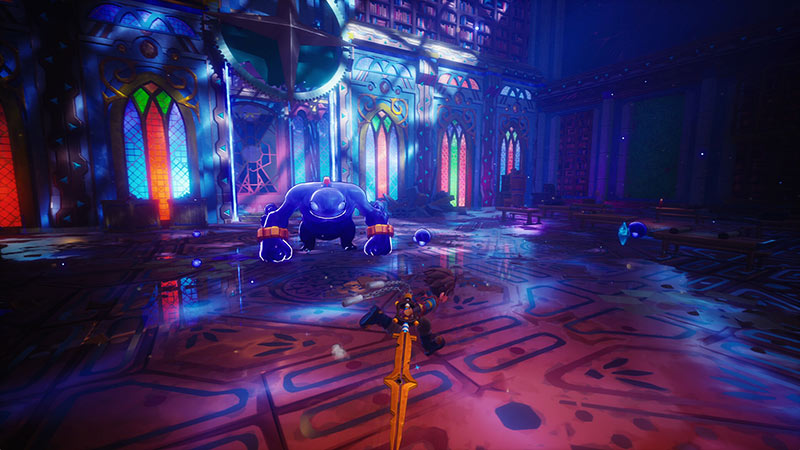
Composing the music is one thing, but implementing the logic for when and how it should change —for instance, during combat— is a different thing
After that, the less enjoyable part was handling all the FMOD implementation and logic needed to dynamically change things such as the combat state, cinematics, and other in-game events.
And I’d also like to say thank you for the comparison to Nobuo Uematsu. He is a huge reference and inspiration for me, so that really means a lot.
repip: As a Polish gamer, I have to ask: did you plan—or do you plan—to add Polish language to the game, at least in the form of subtitles? While watching the end credits, I think I spotted a few Polish names in the testing section.
Weird Beluga: We’d actually love to add more languages to the game. One of the languages we’ve received the most requests for so far is Turkish. And yes! The company that handled QA for the game had several Polish testers working on it!
repip: Duskfade just came out, but do you have already a vision for the next game? Is it already in development, or are you still fully committed to Duskfade?
Weird Beluga: There are still a few small things we want to improve in Duskfade, but of course we already have several ideas for our next game. Maybe a Duskfade 2, or perhaps a return to the adventures of our little snail! We also have some original ideas that have been cooking in the studio for a while.
As you can probably tell from the jump from Clid to Duskfade, we really enjoy experimenting and playing around with different genres, haha!
repip: Thank you very much for this interview, on behalf of myself and the readers of retronagazie.eu, I wish Duskfade a great reception from the gaming community! And please pass on my regards to the people who designed the sundial rail sections—they’re fantastic, and I hope there are even more of them in Duskfade 2!
